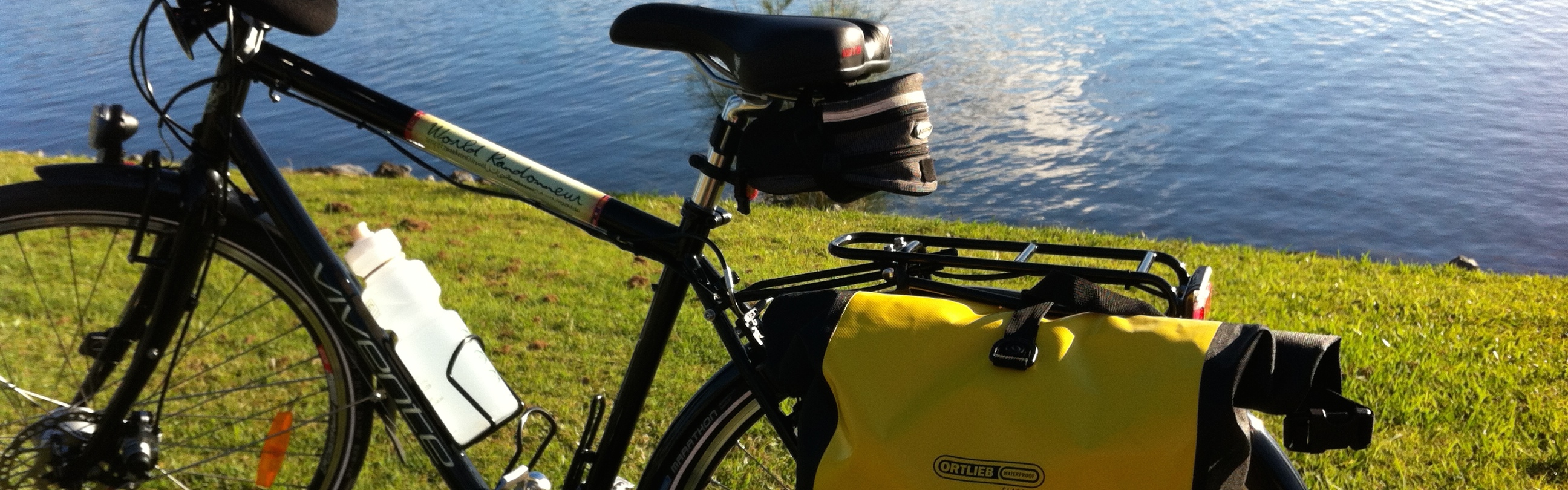

Riding here. Travelling there. It would be easy to think that all this bicycle riding is all go, go, go. Non-stop. An endless trail of activity. Perhaps you’re exhausted just reading about it. Well, huddle in. I want to tell you something that I haven’t written in this blog before.
I like resting.
In fact, I’m a big fan of resting. And it seems that’s a good thing. Actually, even better than I’d thought.
Pedalling through my bicycle experiment in 2015, choosing the bicycle over the car where I could, I expended more energy getting from ‘a’ to ‘b’. I adjusted and adapted and ended that year fitter than I started. Then in 2016, training for the GreatVic elevated my weekly kilometres. At the outset, I was a little worried about how I’d go with this extra mileage and extra energy output.
Then I discovered that rest had a place at the training program table. Yes, thank you.
Every fourth week in the training program was designated as a recovery week. This was a week for fewer days riding and fewer kilometres. A week to allow the body and the mind to recover. I liked this idea but I made an interesting observation.
You see, some part of me wanted to keep riding and not have that recovery time. I like riding. It makes me feel good. I’d even say riding gives me an enjoyable high. So when each recovery week came around, I felt disappointed that I wasn’t going to have as much bicycle time that week. I also worried that I might lose fitness during the break.
But I didn’t. In fact, taking recovery time made me stronger. Continuing without a stop was likely to be counterproductive. I would have become tired, perhaps bored and less excited about riding. Taking the recovery time allowed my body and mind to rest. It sharpened my motivation. And, rather than losing fitness, this was the time when my body built fitness.
This fact was a touch counterintuitive for me. You see, although I have always enjoyed rest and been reasonably adept at giving myself rest time, I’d seen it as ‘time out’. A time of non-doing. A time for stopping. But I hadn’t given rest its full value. I hadn’t seen how rest can make me even better. During rest time is where my well-being begins.
Seeya later. I’m going for a snooze…. 😉

I’d lost my way. On a Sunday of all days. Mondays I can understand. On Mondays, the world returns to work and a collective lull hovers across the morning. But this was a Sunday and I was out riding and I didn’t know which way to go.
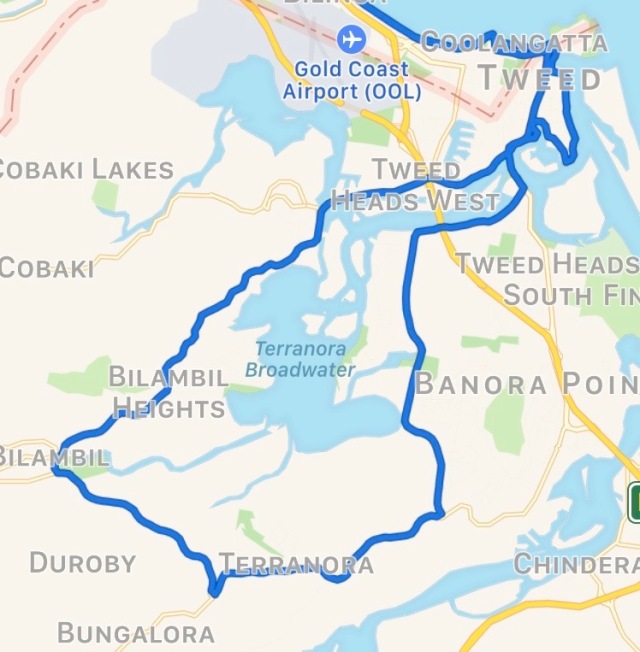
We set out soon after sunrise to ride a new circuit; some roads would be familiar and some would be new. It would be our longest ride since returning home from the GreatVic. There would be hills to climb too.
Out to sea, sunlight sprayed from behind a curtain of clouds. Overhead, the grey sky hung low, pressing steamy air into a thick soup. We pedalled south, heading for the northern tip of our neighbouring state, New South Wales. Here the land turns green. The Tweed Valley, home to Wollumbin and the Tweed caldera, is rich with orange soil and bordered with hills. To ride there, we must climb.
Through the twin towns of Coolangatta and Tweed Heads we ride over the state border. Time marches forward an hour with daylight saving automatically spending my early hour. Crossing over Terranora Creek, we pedal along Dry Dock Road where lands run low and waters run high. Then, turning into Fraser Drive, we begin four kilometres of steady climbing up to Terranora Road. We head west, still climbing. This is a familiar route.
Then we take a right turn and descend into unfamiliar roads.
A steep descent on a road wrapped in trees brings shade and speed. It’s fun. As the pitch of the hill flattens, I’m looking for signs of the small community of Bilambil. I was expecting to see the community hall, the tennis courts, the store and garage at the bottom of the hill. Nothing’s there. To the left, the road heads inland. To the right is a no-through road. Ahead is a steep hill that I wasn’t expecting until after Bilambil. So I stop. I’ve lost my way.
Looking behind to where we’ve come from, I see a bicycle speeding down the hill, and another and another. As the first cyclist passes, I call out: “which way to Bilambil?” “Up the hill”, he replies with a touch of glee as he pedals to squeeze every bit of energy out of the descent. Another cyclist passes and another and I notice their bikes are different from what we usually see.
This area is a popular destination for weekend cycling but in our trips south we’ve only seen speedy road bikes racing their way around the hills. These bikes, though, were touring bikes like ours. It was like meeting your own kin.
So up the hill we rode, mingling with the tourers, yarning about bikes and travel, and finding out about this interesting group of bicycle riders. By a stroke of serendipity, we’d met the Wollumbin Bicycle User Group (BUG) on its Sunday ride from Murwillumbah.
Bicycle User Groups (BUGs) are social riding groups that meet regularly for an enjoyable ride. They might be formed around a suburb, city, workplace or university campus; and can be found in many different countries. BUGs vary in terms of how often rides take place, the distances travelled and the type of riders attracted. For example, some groups focus on road bikes, while others are formed for mountain bikes. Most of the Wollumbin BUG riders we met rode touring bikes, but I get the sense they’re a very inclusive group with a genuine interest in encouraging people to get on a bike.
After summiting the hill, we descended into Bilambil where the group stopped for a cuppa in the local park. After some enjoyable chat, Jane and I continued on to the Gold Coast, leaving with a lift in our pedals and an invitation to ride with the Wollumbin BUG sometime soon. I’m looking forward to it.
The following link takes you to a list of BUGS in Australia:
https://www.bicyclenetwork.com.au/find/club/?state=&keyword=&all=

That little hill in the middle was the one I hadn’t expected.
Over the border into some beautiful areas for riding.

Imagine taking 4000 bicycle riders across 527 kilometres over nine days, housing them, feeding them and helping everyone stay safe. In December, I wrote about my remarkable nine-day adventure in My GreatVic. But there’s another story to be told. It’s about the amazing support structure that makes the GreatVic great.
You see, it’s not just a ride. The GreatVic is a rolling bike festival. Every night there’s a new camp for bicycle riders to roll into. Each afternoon, we rode beneath the blue inflatable ‘FINISH’ arch and along the festival site’s ‘main street’. Here, food vendors sold milkshakes, ice creams, coffee, and potato swirls. A bicycle shop solved mechanical problems and an outdoor supplies store filled the gap for camping essentials. And there were always one or two not-for-profit groups local to the area, selling toasties or sizzling sausages to raise funds.
Jane and I always finished our ride with chocolate milkshakes to refuel before collecting our luggage and finding our tent. Two bags each, weighing less than 20kgs combined. That was the luggage limit per person. Each morning, we’d pack our bags, hand them to the friendly guy on our allocated luggage truck and then our bags would be waiting for us at the next festival site. Our tent for the night would also be waiting and, already set up.
The GreatVic caters for a variety of camping options. You can use your own tent and set it up yourself. Or you can pay some extra dollars to have a tent supplied, assembled and dismantled for you. That’s what we chose and it was a good choice for the ease it brought.
As well as this canvas community of tents, each festival site had a large marque – known as Café de Canvas – for dining, drinking and dancing. Every night there was entertainment – a band in the marque, a movie on a huge outdoor screen and drinks at the Spokes Bar. A quiet night, early to bed, was also a realistic option.
…an astonishing logistical feat.
Providing meals, entertainment, toilets and showers at a different site every day as well as organising 4000 riders before, during and after each day of riding, is an astonishing logistical feat.
The mobile kitchens served 12000 meals each day with lunch being served on the road. Seven shower trucks provided for 100 showers at a time. (And our showers were always warm.) Eight toilet trucks accommodated for the festival site and a band of port-a-loos were located along each day’s route. Water refill stations were situated at each festival site as well as at each morning tea, lunch and afternoon rest areas. A fleet of fifty semitrailers carried the festival from site to site and 200 vehicles supported the ride.
The support vehicles included motor bikes carrying event marshals and first aid care. Their presence throughout the route was reassuring as we rolled through landscapes unfamiliar and roads unknown. There were also mini-buses known as ‘sag wagons’ towing a trailer purpose-built for carrying bikes. The sag wagons picked up riders who couldn’t finish the day’s riding because of sickness, tiredness, injury or mechanical problems that couldn’t be resolved.
Then there were the WARBYs (We Are Right Behind You) who ride the route as volunteers giving mechanical and moral support to riders. We didn’t need to use the sag wagon nor the WARBYs but knowing they were there as a back-up was heartening.
I still had to push my pedals and see my wheels moving across the miles but, knowing this amazing support structure was with me, made My GreatVic much easier and enjoyable.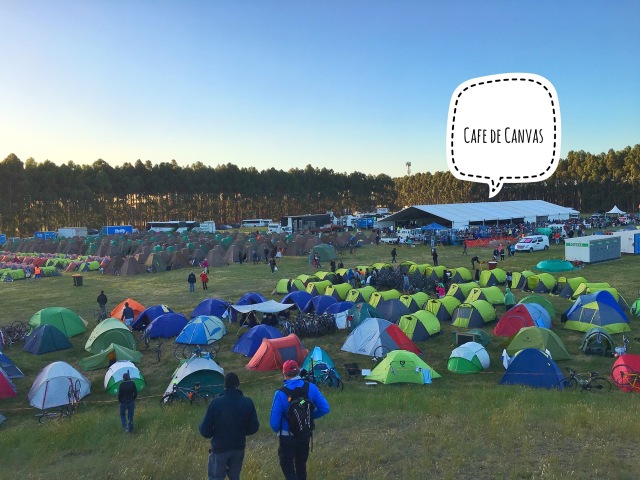

A panoramic view of our Day 7 festival site near Bells Beach.

Some tent options include inflatable mattresses.

Toilet truck at the Grampians festival site.

Our friendly luggage truck guy waiting for our bags.

Tyre pumps were at available at each campsite before setting out for the day.

Lunch stops had water refill stations and First Aid tents.
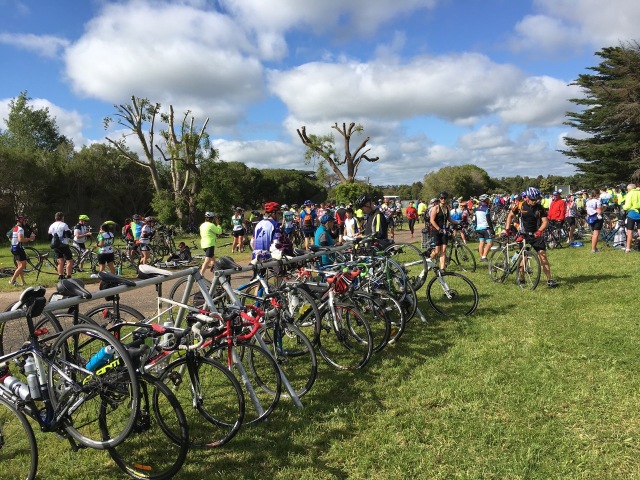
Morning tea stop with bike racks available.

Event Marshall helping to keep riders safe.

The SAG wagon picked up riders who couldn’t finish the day’s riding.

On the tail of a volunteer WARBY.
 a bike for all seasons