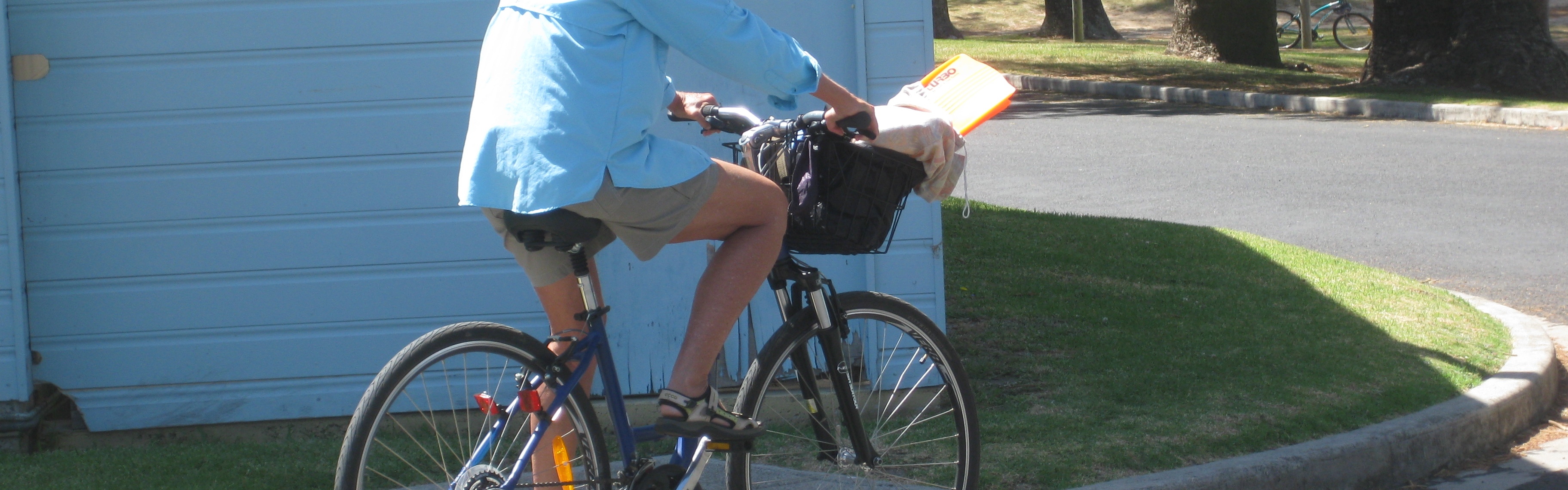

Familiar yet foreign. That’s how I would describe driving the car. It’s something I know how to do, yet now, it feels a little different. In fact, driving the car feels a little weird.
It’s nearly nine months since this experiment began. That’s nine months of driving less. And riding my bicycle more. Much more.
The experiment was never framed to eliminate the car but to test the boundaries of where the bicycle could replace the car in my everyday living. What could I realistically use my bicycle for and where would the car need to step in? And also where could I combine public transport for a better option? After nine months, I drive the car a lot less. The bicycle has taken over. And that means something very interesting has happened.
When I drive the car, it’s a very different experience to nine months ago. I no longer drive on automatic pilot. I have to concentrate. I have to open up the memory of driving. Well not the part about ignition, brake, accelerator, reverse, forward and the techniques of driving. They’re still engrained into my memory and available as soon as I sit in the driver’s seat – which I must add feels very big. In fact, the whole vehicle feels H U G E.
No, it’s not the skill of driving that needs the refresh button. It’s my navigational memory that needs re-booting.
There’s a view in the popular press that women can’t read maps, and although that might be true for some, I’m not one of them. Navigation is something I find easy and enjoyable. I like the mental gymnastics of mapping out a path. Sorting through the different options, noting what each offers, reading over a map, and making a mental image of how the streets and turns relate to each other, is cognitively stimulating.
Whether I’m driving the car or riding my bicycle, it’s the same process. So now that I’m riding my bicycle more, guess what’s in the front of my navigational mind?
Bicycle paths.
I don’t want to tell you how many times I’ve thought of jumping the gutter onto a footpath, only to remember that I’m driving the car! No, no, no, that’s just not possible. Stay on the road.
It’s not endangering anyone. These are fleeting thoughts appearing because, for the past nine months, the footpaths and cycle ways are my most used pathways. They’re the tracks worn into the maps of my mind. It tells me how adaptable the mind can be and how small changes have substance over time.
So I have to concentrate and navigate the way by road. Automatic pilot won’t do… which I think might be a good thing. It means I have to concentrate and be precisely where I am – in the car, driving. Mindfully driving.

Remember the fable about the tortoise and the hare? Aesop the storyteller from ancient Greece invented this little tale to show that slow and steady wins the race.
Well we weren’t racing. And as the tortoises, we weren’t riding that slowly. And the hare, a most unlikely hare at that, wasn’t trying to drive her car that fast. It was really just an accidental experiment that happened on the way to the Byron Bay Writers’ Festival.
The morning traffic was snaking through the main road out of Byron Bay. At the roundabout near the police station, we rode confidently heading out of town towards the festival site. A friendly Beep! Beep! made me look around. A small black sedan with a smiling face and a waving arm passed by, giving us a wide berth (an extra metre for being friends we later laughed). We waved back and pedalled on, perhaps a little faster, excited to be heading to Day 1 of the festival.
It’s about five kilometres out to the festival site which by bicycle takes us about 20 minutes. Along the way we pass car after car after car as they queue two kilometres along the road into the festival site and even further back towards the highway (see the video below for a glimpse of the ride to the festival).
Being the first day, we have to queue to receive orange wristbands signalling our 3 day passes. We lock our bikes inside the festival fence, check the program and head over to the Feros marquee to watch Kate Grenville, Barrie Cassidy and Ramona Kavol talk about writing a memoir of a parent’s life, known and unknown. The session is yet to start but the tent is already full. We stand behind the last row of white plastic chairs.
Four minutes later (I took note for good reason) a friendly familiar face stands beside us. We three laugh loud.
“You beat me!” says Ms Hare.
This is my first video so if you have any trouble accessing or playing it, please let me know so I can learn how to make it better. Thanks!
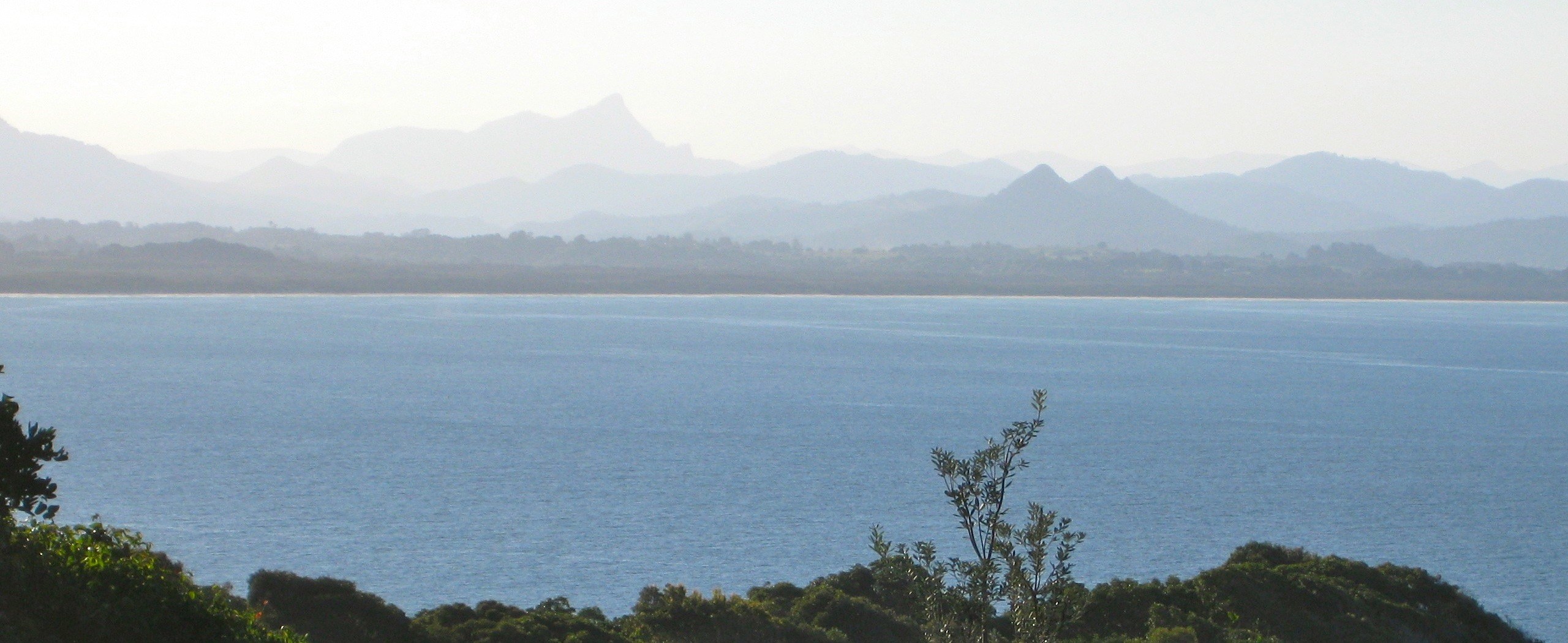
At the outset of this experiment, my thoughts roamed – sometimes leisurely sometimes briskly carrying concern – around what this project might bring. What decisions I might need to make. Last week I met one of them.
It had been nearing. And nearing. Then it was here.
How will I get to the Byron Bay Writers’ Festival?
The Byron Bay Writers’ Festival brings me a lovely dose of literary life over three days. It’s an annual trip that I really look forward to. I thoroughly enjoy the writing community it brings me and I always leave feeling very inspired to keep my work moving along. It also brings me an interesting annual ‘marker’, one that helps me trace, note and reflect upon the unfolding of my writing life.
Byron Bay is about 75kms down the road by car and more like 82kms by bicycle. It’s a little longer by bicycle because the cycle way that crosses the Tweed River is more winding than the M-One, the main highway. Also, it’s better to avoid riding on the M-One, and ride smaller roads through the coastal villages of Kingscliff, Bogangar, Pottsville and Hastings Point. Yes, I’ve thought it through.
At some point though, I’d have to enter the M-One for about 20kms. It’s along that stretch that a bridge bears the colours of a rainbow. Each upright in the bridge rail is painted a colour of the rainbow, colourful, yet a piercing reminder of where a local woman died riding her bicycle. It’s sobering and a little haunting but not enough for me to say no I won’t ever ride that way.
In the earlier months of the experiment, I planned to ride to the festival just because I could – and for the adventure of it. But realistically, what happens when we get down there? We’d have to camp in a tiny tent for three days, which I don’t mind but not when I want to spruce up each day for a literary feast. Or we’d have to pay for beds somewhere.
Hmm, isn’t that a campervan we’ve got sitting in the garage downstairs?
It seems to me that if I take on the adventure of riding my bicycle to Byron Bay, it’s going to takeover my whole experience of the weekend when my main aim is to enjoy this much-loved annual dose of literary life and inspiration.
So the campervan it is! With the bicycles carried on the bicycle rack that brought an unexpected turn early in this experiment.
And just like in years past, we’ll park our small campervan on a beachfront site at the campground, sleep comfortably listening to the sounds of the ocean, leave the campervan there for three days and each day ride our bicycles to the festival!
 a bike for all seasons