
A week makes a difference at this time of year in Oslo. Spring is springing alive and the people with it. Everyone is celebrating the sunshine after the long winter.
Three weeks earlier, as the locals prepared for Easter, snow fell unexpectedly in the city. It took most by surprise. It was supposed to be spring when winter tyres on cars change over to summer tyres, when the City Hire bikes return to their stations, when most people start preparing their bicycles for cycling again.
When we arrived in Oslo I noticed very few people cycling and that’s because there’s a distinct season of cycling here. Not for all bicycle riders as there are steadfast cyclists who brace for the cold and cycle throughout the year, with wind, snow and sub-zero temperatures. For others like our friend, commuting to work by bicycle begins each year in April and goes until the snow returns which might be October.
So a week after we arrived in Oslo, there were many more bicycles. It was the week the locals dusted off their bicycles and started spinning those pedals.
Mountain bikes are quite common here. Perhaps because there are a few hills to climb in the city, also I suspect for better grip on the road. The day we experienced minus two with light snow falling, the streets quickly turned slippery. Plus some streets have tram tracks which are quite slippery. It might also be that nearby there are some excellent dirt trails (but more about that in another post!)
I noticed that Oslo’s City Hire bikes are very well used by the locals. I was curious how the hire system worked. Walking back to our hotel late-morning after a walk around the new harbour front at Aker Brygge, I saw a man in his fifties, dressed in stylish jeans, with a buttoned business shirt, and a light mustard overcoat, swiping a card to use the City Hire bikes. There are stations all around the city where small bright blue bikes with chrome handlebars like dragster bicycles from the 1970s wait for their next trip. I hadn’t worked out how to hire them so I asked him.
He said he buys a season card that costs him 120NOK (AU$20 / 14 EUR). He said it’s very inexpensive as the season runs from April until November or when the snow comes, whichever happens first. The bicycle hire lasts for three hours and then you have to replace the bicycle into a station. When I asked him what he uses them for, he said he rides the bicycle for getting around the city for work meetings.
“So you would use the hire bike a couple of times a week?” I asked.
“Oh no, I use it two or three times each day!”
Interesting things happen when you place your attention on them. In the inner city we saw a string of bicycles parked against an old rock wall along a footpath. Nearby, a black bicycle was suspended on a repair stand with a man dressed in black looking at it intently and exchanging chat with two other men. A sign read Christiania Cykelversted. This was a footpath bicycle workshop. To see the footpath business was interesting in itself but the owner added another note to it.
I crossed the road to talk with him about his bicycle workshop and discovered that he’d visited Australia in the 1980s over four or five years for the Commonwealth Bank Race. He had been the coach of the Norwegian cycling team!
As the days became warmer, more bicycles appeared on the streets of Oslo. There are City Hire bicycles meandering along from place to place, mountain bikes, racing bicycles, dutch cargo bicycles with groceries and children; and a good showing of cycle chic too with retro chrome and Brooks leather saddles.
Yesterday the temperature topped 22 degrees celsius! It feels like Spring has arrived and with it, Oslo’s season for cycling!

Springtime cycles.
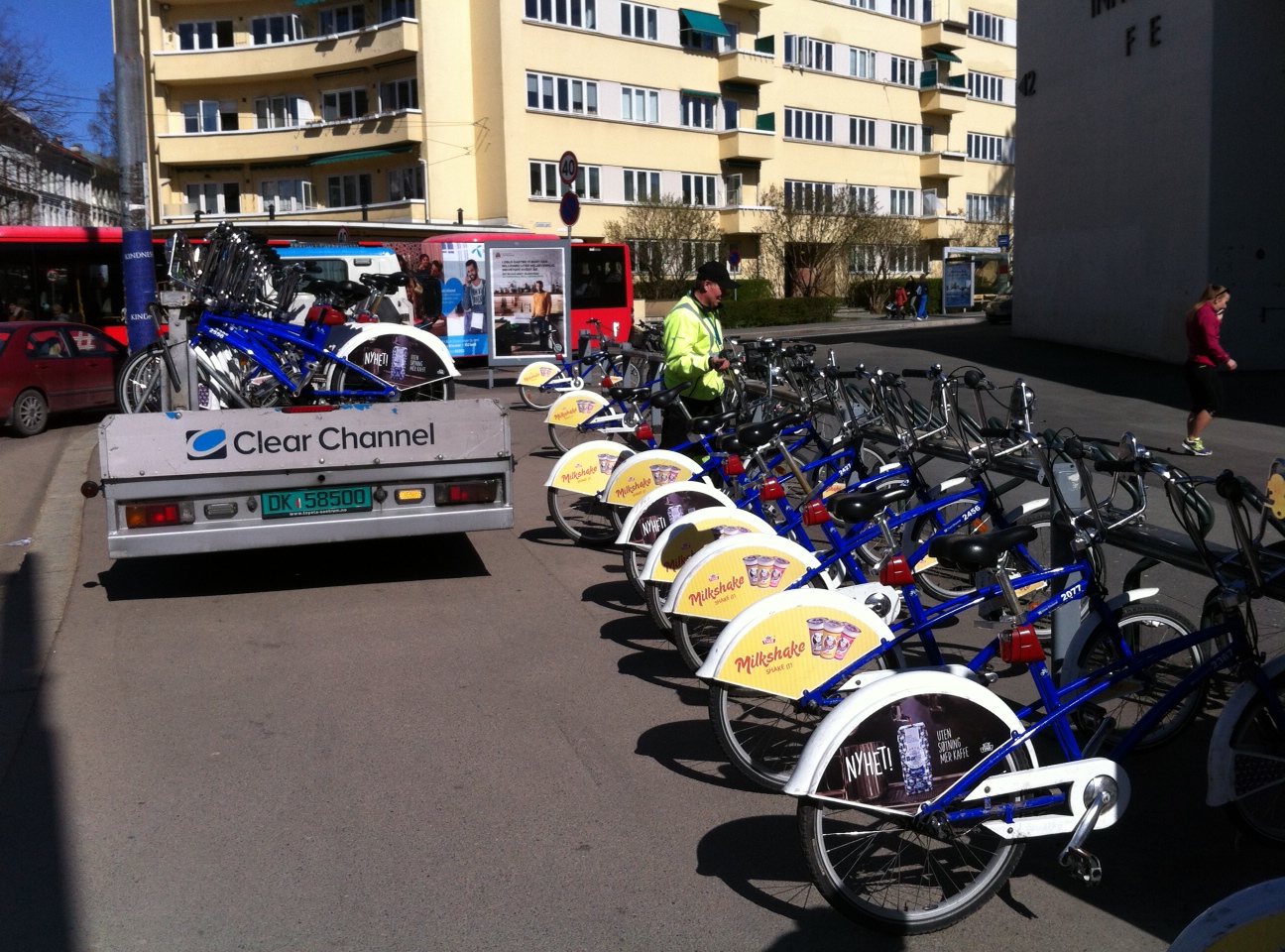
Oslo’s City Hire bicycles with workman replenishing the bicycle stations to ensure there are enough bicycles at each station.

Peak hour commuter in a bicycle lane in the city centre.
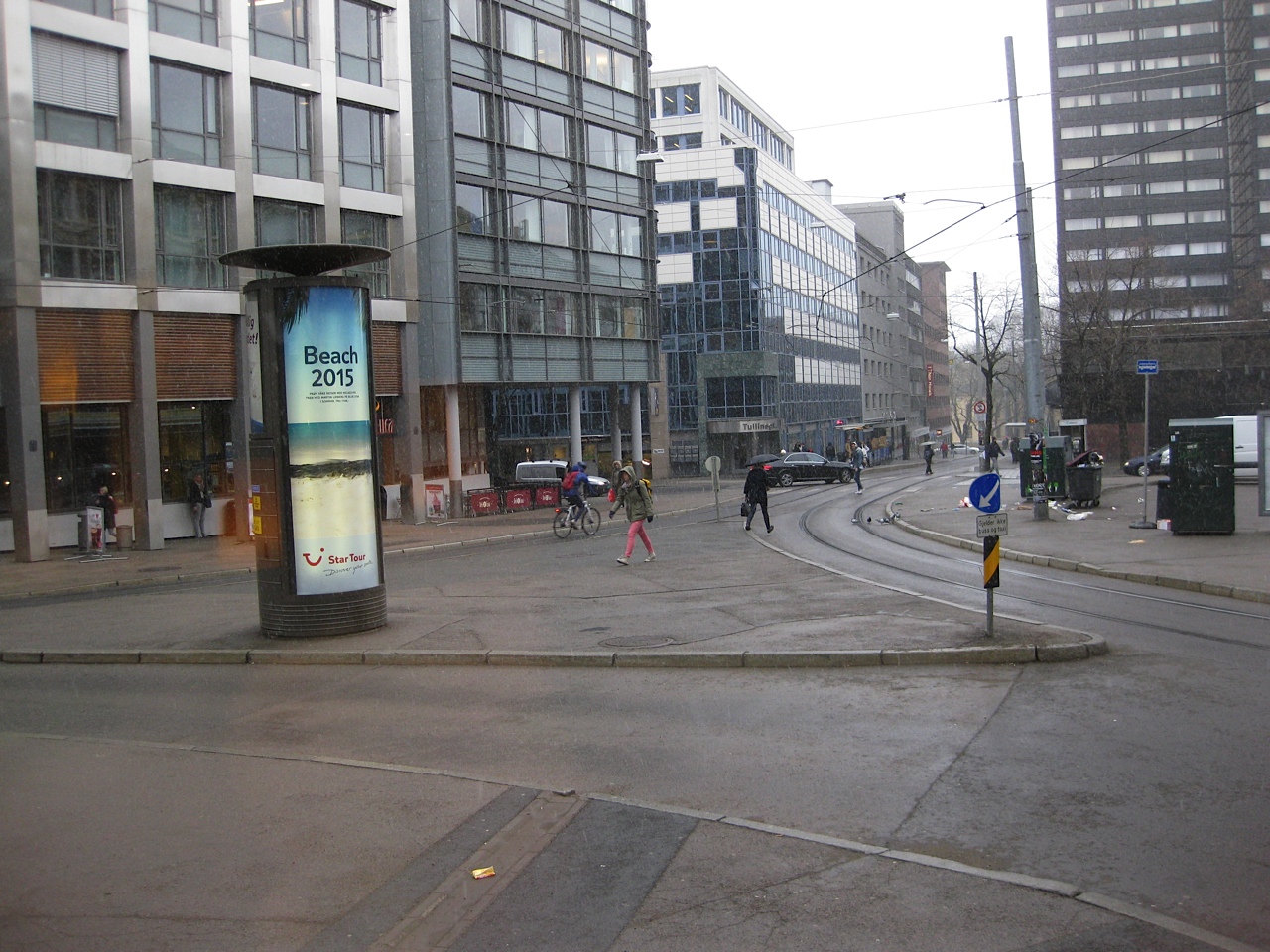
Minus two, light snow falling, cyclist riding, tram tracks slippery. Notice the illuminated advertisement: BEACH 2015. This was outside our hotel. I tried not to look at it 🙂
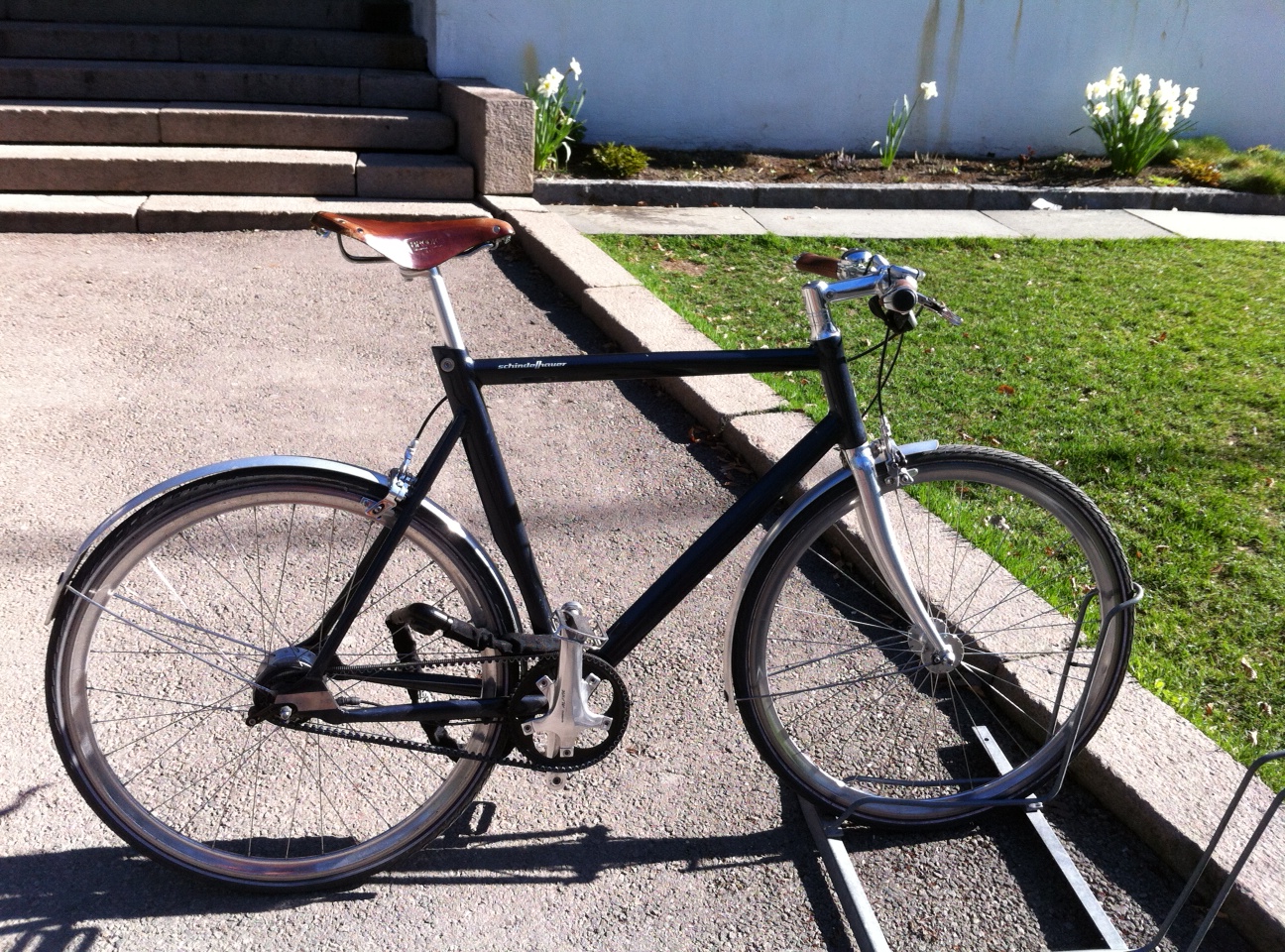
Cycle chic in Oslo.

Aside from the cycle chic, a plastic bag is a practical accessory for keeping your bike saddle dry. We noticed this in Copenhagen as well. Plastic bags were often tucked under the saddle, just in case.

Bicycles parked in inner courtyard of apartment building. Photo taken from footpath looking in.
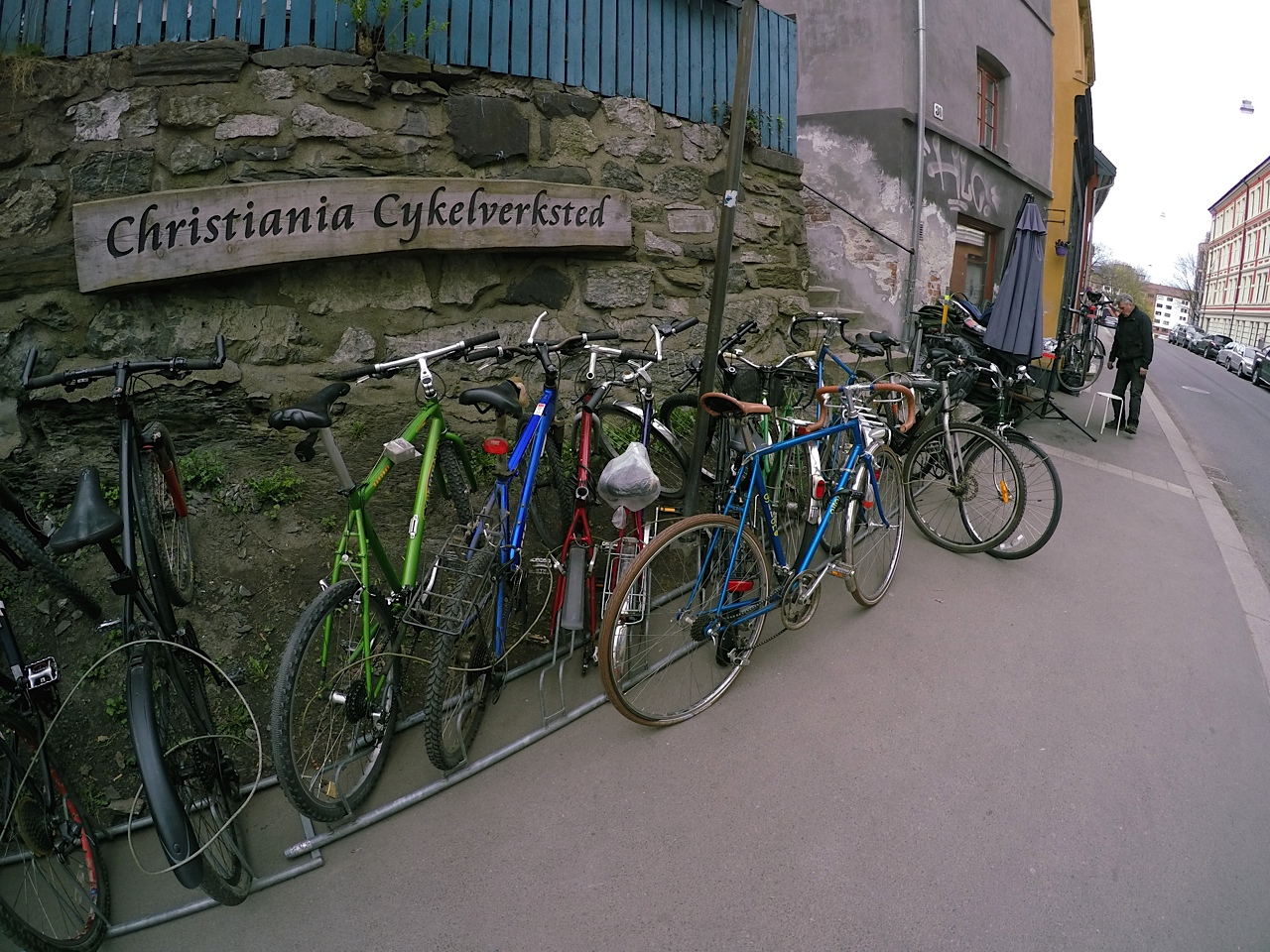
The footpath bicycle workshop run by the former coach of the Norwegian cycling team visiting Australia in the 1980s.
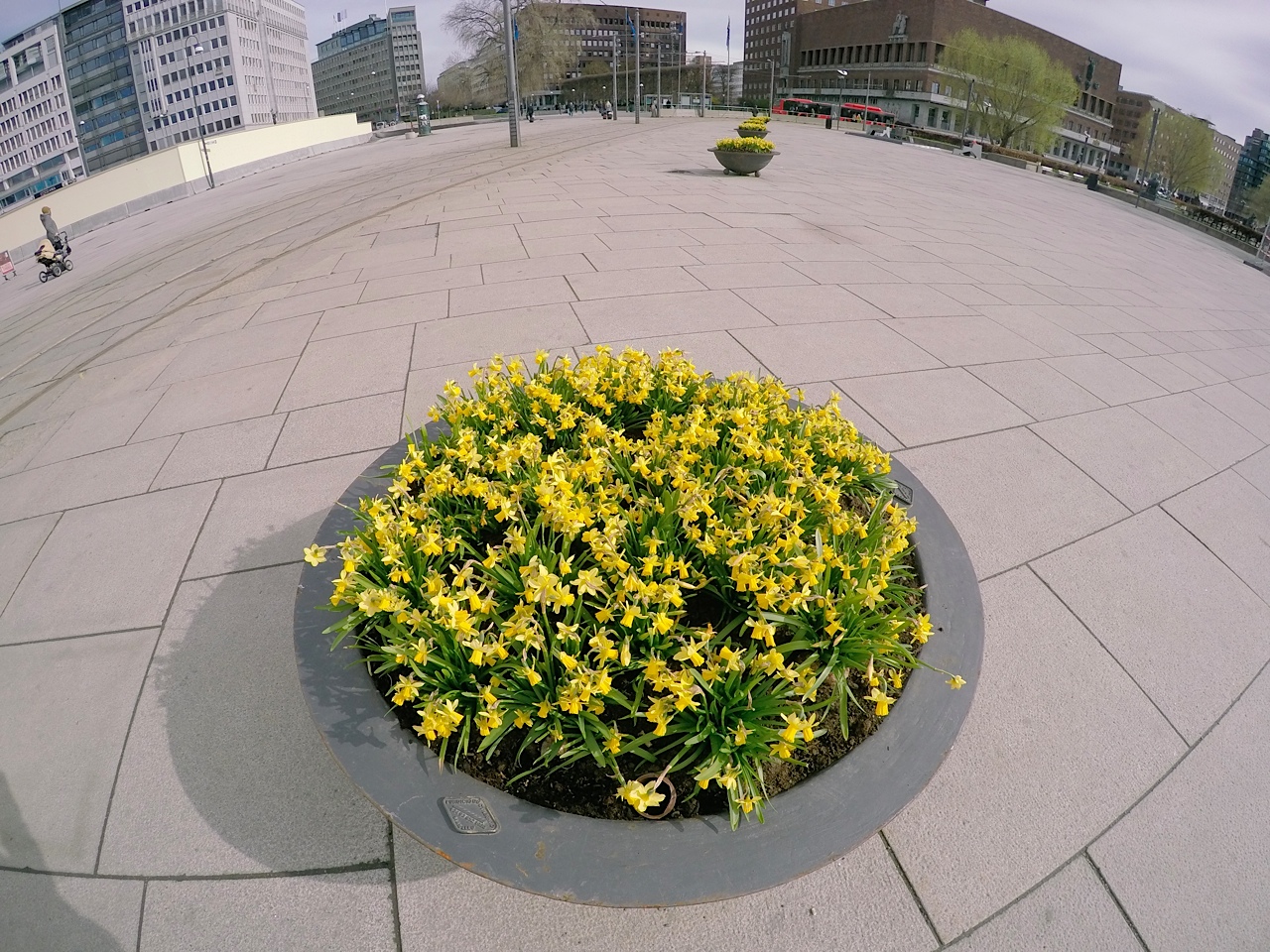
Spring flowers at Aker Brygge.

The thought of riding a bicycle in Copenhagen was intoxicating. It had been 72 hours and 15,637 kilometres since I last spun some pedals around and this city is one of the world’s cycling capitals, a role model for bicycle culture and lifestyle. I wanted to experience it first hand. I wanted to see just how good cycling in everyday life can be when people live out their everyday lives on two wheels and when the city’s infrastructure supports that choice with genuine investment. In particular, I wanted to find the Cykelslangen.
Since arriving, I’d been walking and watching and photographing the way bicycles fit into this city; how they move, where they travel, where they park, what type of bikes there are, and who’s riding them. I’d been imagining riding and couldn’t wait for my jet lag to pass.
So, fuelled by a Scandinavian breakfast of rye bread, cold meats, boiled egg, smoked fish, capsicum, cucumber, cheeses, finished with black coffee and a Danish pastry (or two, well maybe three… it was going to be a big day out), I was ready to ride!
Our hotel hire bikes were stored in the basement and after adjusting the seats so our legs have a comfortable stretch on the downward pedal, we selected the lowest of the bike’s three gears and rode up the driveway, waited for the roller door to open and pedalled out into a bicycle lane. Repeating my bicycle mantra…keep to the right, keep to the right.
Bicycle lanes are common.
Throughout Copenhagen, bicycle lanes are common. These are lanes dedicated to bicycles. Cars do not park in the bicycle lanes (as I often encounter on the Gold Coast). Pedestrians do not walk in them. They each have their own lane.
If I don’t have a time limit, I like to amble when I’m riding my bicycle but in Copenhagen, I’d noticed that cyclists travel briskly in the lanes. Everyone keeps moving, no dawdling, because you don’t want to block the lane. This means the bicycle moves people from A to B quickly, more quickly than a car, bus or walking would.
We set off from the hotel with some loose directions for finding the Cykelslangen from the young woman at the hotel reception. Our first step is to find our way to the harbour front. We knew the general direction and with the bicycle traffic moving quickly, we tacked onto the back of some other cyclists who were heading in that direction, stopping at the traffic lights with them. This is novel for me. At intersections with traffic lights, the bicycle lane has its own traffic lights. Groups of bicycle riders wait patiently for the red to change to amber and to green. And away we go. Stick to the right, stick to the right.
Bicycles are given priority
Bicycles are given priority – by cars, buses and pedestrians. This too is novel. We saw many instances where cars broke to allow the bicycle to pass. When this happened to me, it was a little unnerving because I wasn’t expecting the car to slow down for me as we approached the intersection together. Once I knew I had priority as a cyclist, I felt safer.
Many different people ride bicycles
And I think the priority given to bicycles, encourages participation by many. We saw people of all ages riding bicycles or being transported by bicycle. The cargo bike is often seen carrying young children tucked away in a nest of blankets protected from the wind by the carriage cover. It’s quite lovely to see a little person emerge from under the carriage cover – transported like the very special treasure that they are. We saw some tricycles too; they were parked so I’m not sure who was riding them.
Then there’s the ease of parking in the streets, as well as on the trains and ferries.
Bicycles are parked almost anywhere – at locations random and in facilities provided. Residents park outside their apartments. Workers outside their offices. Commuters outside train stations in bicycle racks. There are some places where bicycles cannot park but these seem few. Bicycles can travel on trains and on ferries, which provide stands and straps to secure the bike during transit.
We soon realised that the cycling family of four we were following through the traffic lights were also visitors to the city. Hmmm, maybe not such a good idea… but it seemed they were heading in the right direction and they obviously also knew that riding briskly was essential. Once we reached the harbour front, we peeled away from them and paused to soak in the morning sunlight twinkling on the blue water under a cloudless spring sky. My nose was pink with cool but the rest of me felt warm from pedalling and I loved it!
Away from the bicycle lanes, we pedalled slowly along the harbour front towards the new waterfront high-rise buildings, a landmark given by the hotel receptionist. Two white swans swizzled their long necks in the harbour waters, children played on Kalvebods Bølge, a timber promenade that weaves along the water; and kayaks sat stacked under the timber walkway as paddlers squeeze into dry suits, preparing to paddle. Soon we realise we’re underneath the Cykelslangen and need to return to the road bicycle lane to reach the next level.
At the Fisketorvet shopping mall (another landmark given to us), I notice a white bicycle icon set against a bright red wall. It is an undercover bicycle park for bicycle riding shoppers that also provides an area for servicing bikes. Then to the left I see the entry to the Cykelslangen.
It was the Cykelslangen that I really wanted to see.
Before leaving Australia, I’d read about a relatively new bicycle way called Cykelslangen which translates to “Bicycle Snake” (Danish Architecture Centre). It opened in 2014 and received praise for its functionality and fun. I wanted to see it and ride it. Under a clear blue sky with crisp air making my face pink, I turned left (sticking to the right) and freewheeled my way onto the impressive Cykelslangen.
It was amazing. Four metres wide, the Cykelslangen winds its way like a snake mid-air between the high-rise buildings. The Fisketorvet mall on one side and new harbour side apartments on the other. It connects the road bike lane to the bicycle bridge which sits at a lower level.
Prior to this cycleway being built, there were 8000 people who used the Bryggebro Bridge across the canal each day, however, access to the bridge from the main road meant carrying bikes up or down several flights of stairs. With the Cykelslangen, cyclists wheel freely between road and bridge on a suspended cycleway that is practical, in that it improves connection between bicycle paths; and fun as it winds mid-air at a gentle camber that’s easy to climb, and easy to speed along on the decline.
Getting on a bike in Copenhagen was made easier by the city’s amazing cycling infrastructure.
Reducing the reasons not to ride defines good cycling infrastructure. Making it easy to move from A to B, safely, will make it easier for more people to get on their bike. Local governments that promote cycling as a transport option, won’t achieve much just by marketing or running a few workshops. They have to invest significantly in cycling infrastructure that increases access to bike lanes, connectivity between bikeways, facilities for parking bicycles; and means for moving with bicycles on trains, trams and other public transport.
Along with Copenhagen’s bicycle lanes, priority for cyclists, facilities for parking and moving around easily, the Cykelslangen is the type of infrastructure that gives priority to travelling by bicycle. It solved a problem. It removed a reason not to cycle.
I’m glad I found it. So glad, in fact that we rode over it three times!

A typical scene where cars, bicycles and pedestrians each have their own lane. The car lane is to the left, then the bicycles, then the paved footpath. Each direction of traffic has this set-up.

Traffic lights specifically for bicycles regulate the flow of bicycles at intersections. Cars have a separate set of traffic lights.
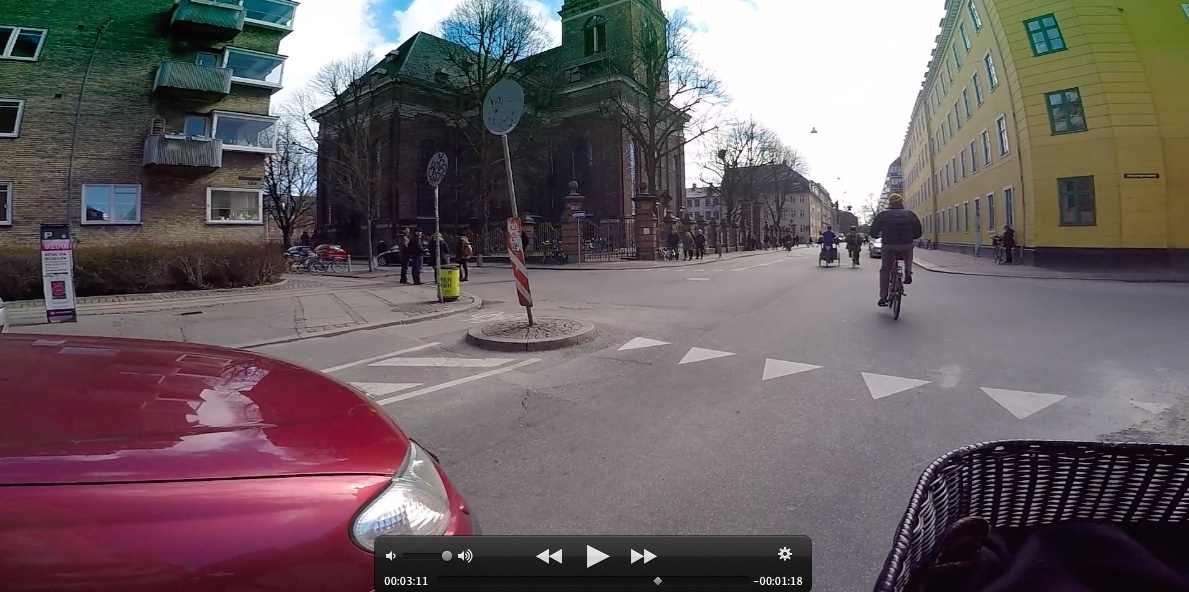
This photo is taken from my bicycle handlebars and shows a car slowing down to give my bicycle priority in going through this intersection. It’s a bit unnerving at first. I’m more accustomed to the car going first.

Cargo bike with child in carriage. No cover over the carriage as it was such a beautiful day.
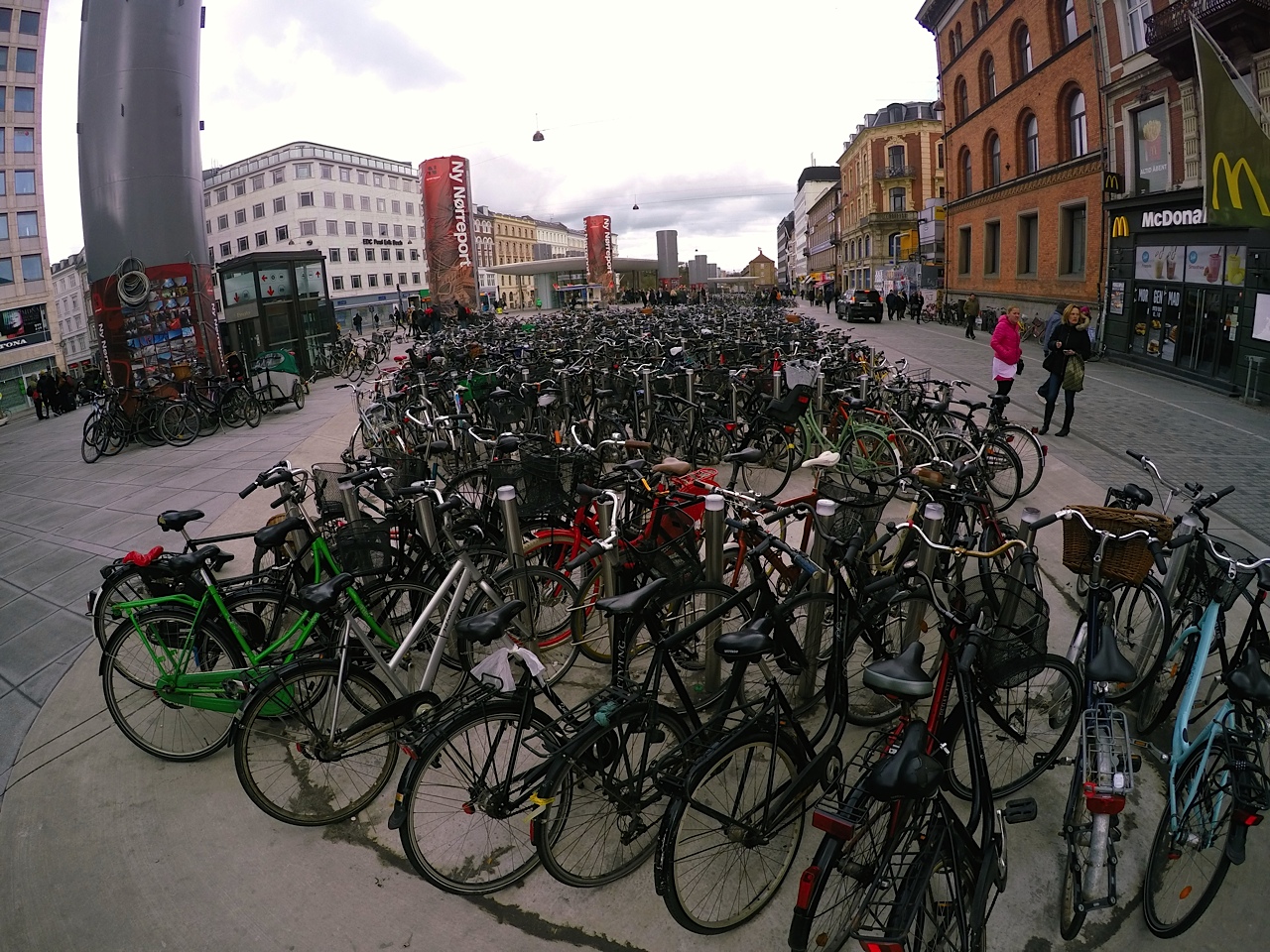
Commuter parking at Norrebro train station. This is only half of the bicycle parking at this station. It stretched for further than my camera could capture.
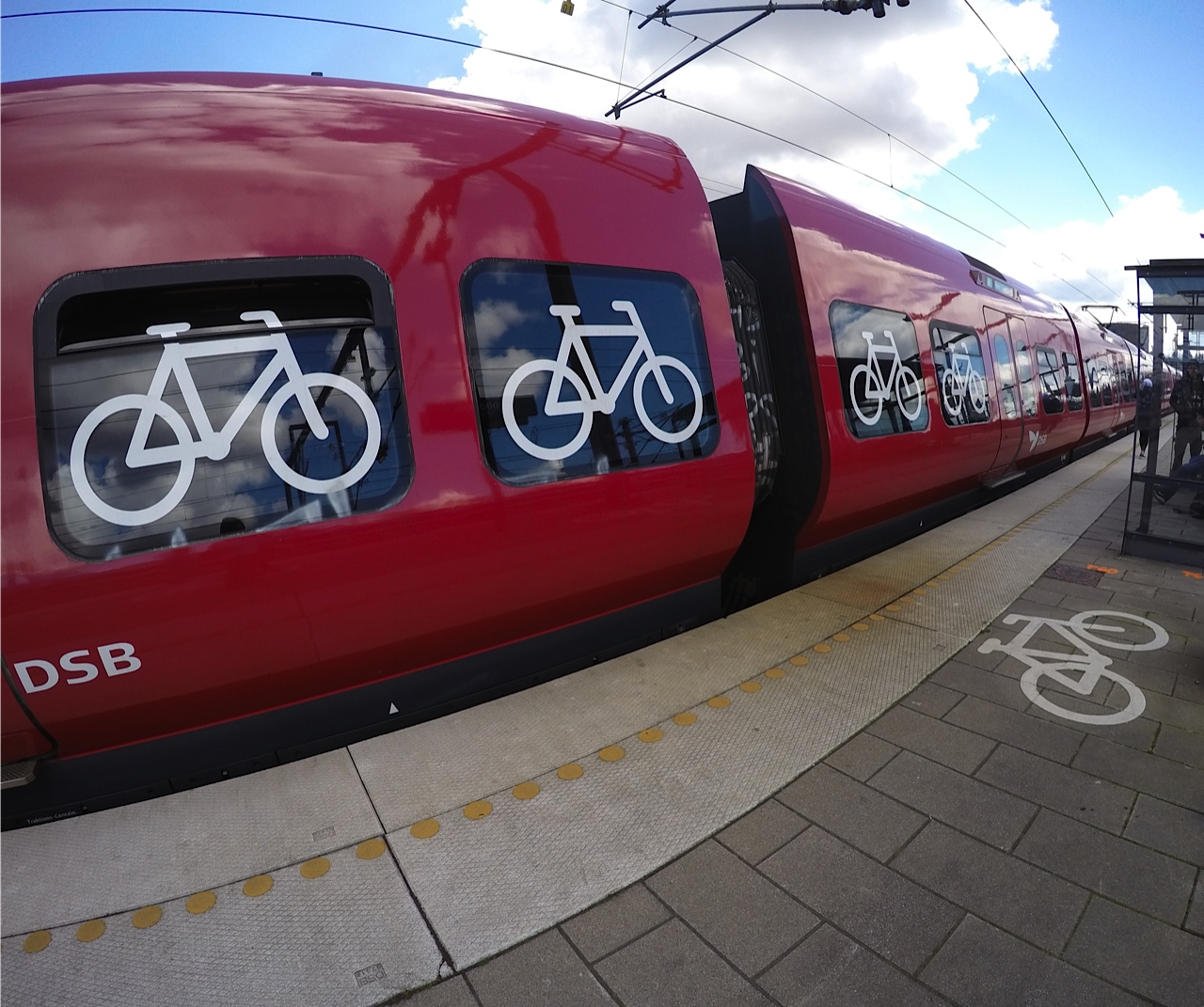
Signs on the train exterior make it clear which carriage are designed for travelling with bicycles.
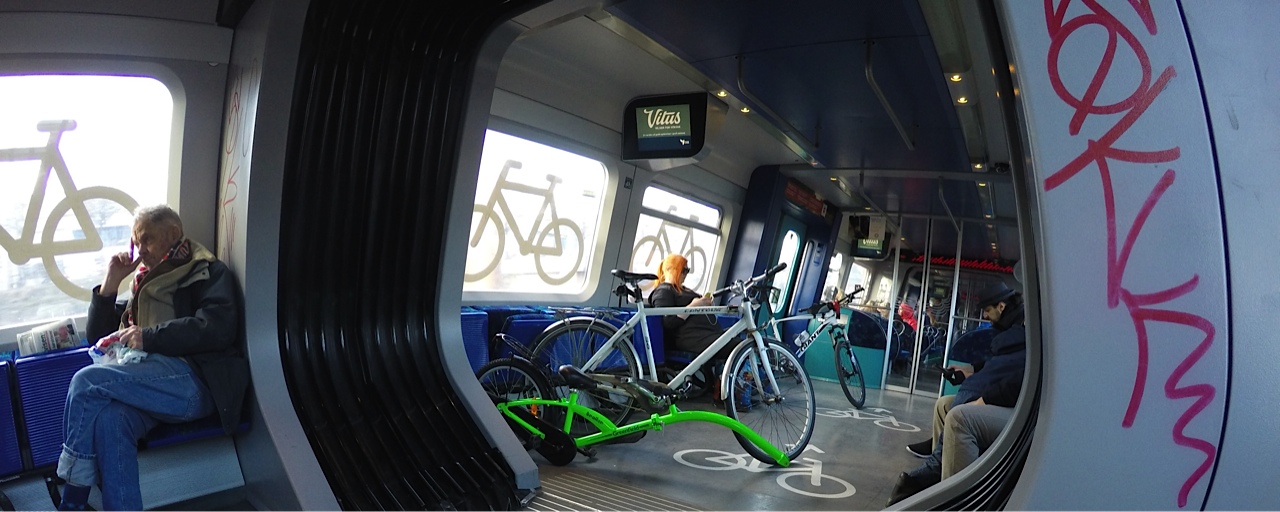
And inside the train, the bicycles are parked securely in racks.
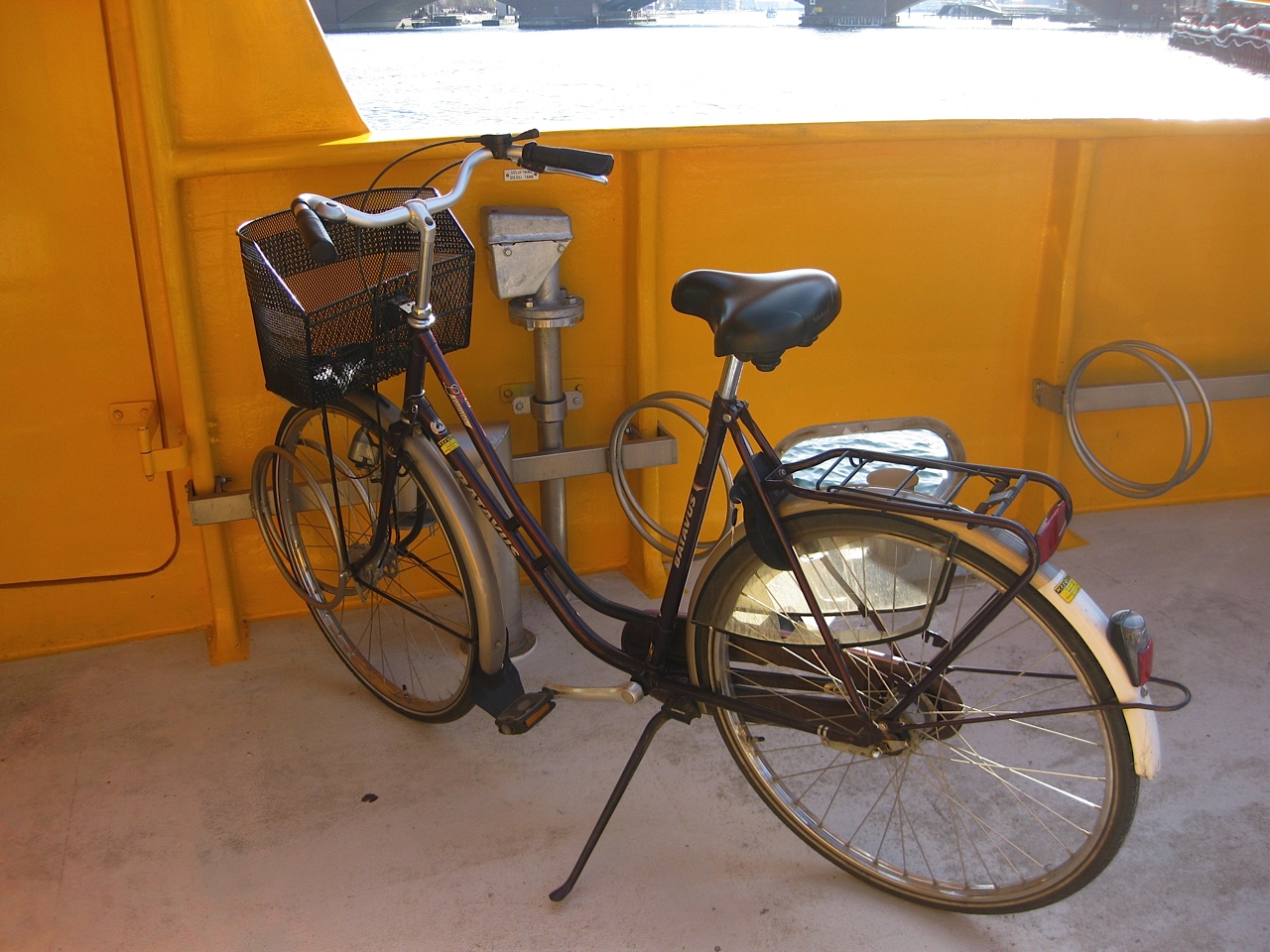
A bicycle parked in a dedicated bike stand on a ferry.
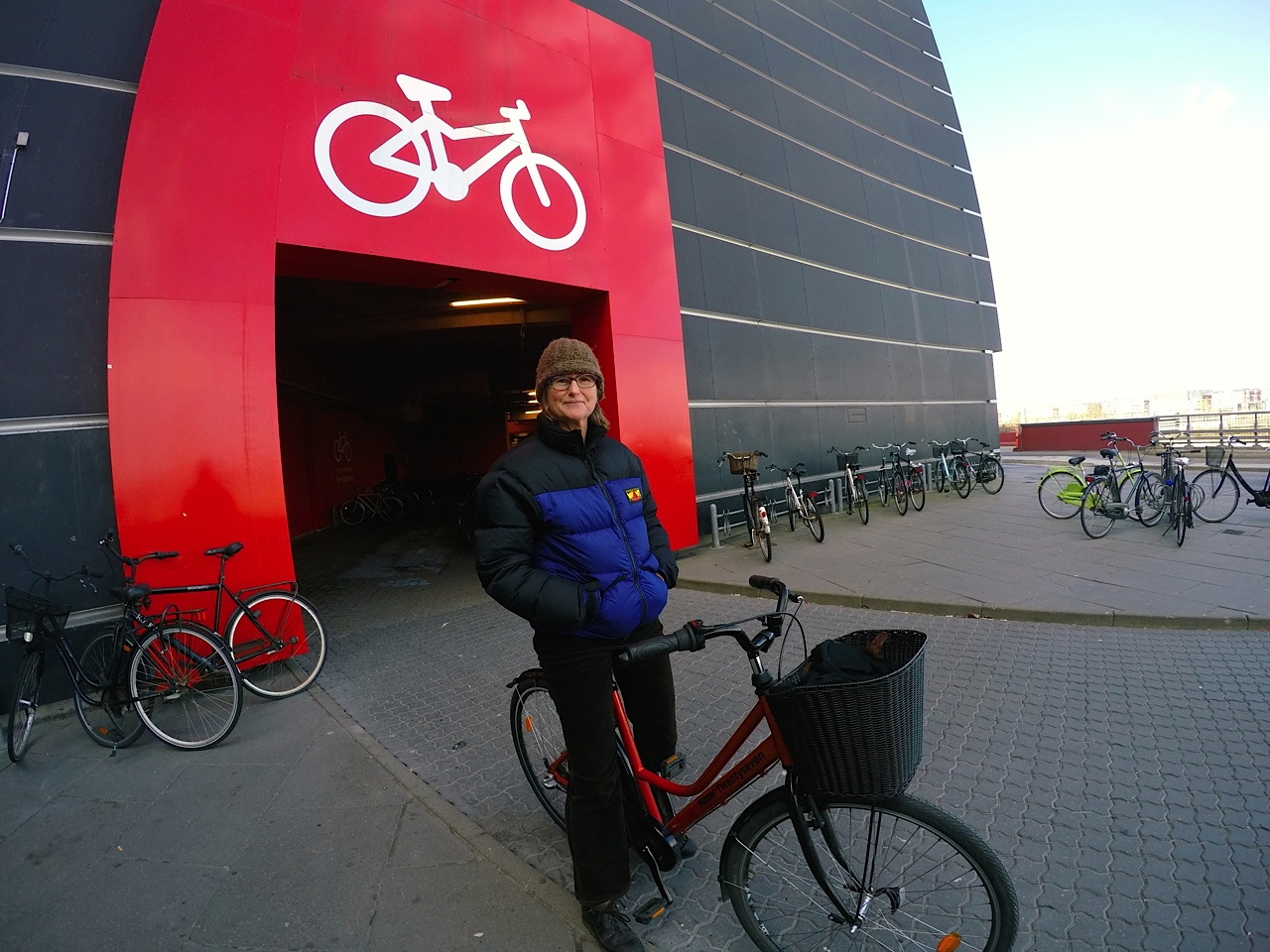
Outside the entry to Fisketorvet Shopping Mall bicycle park.
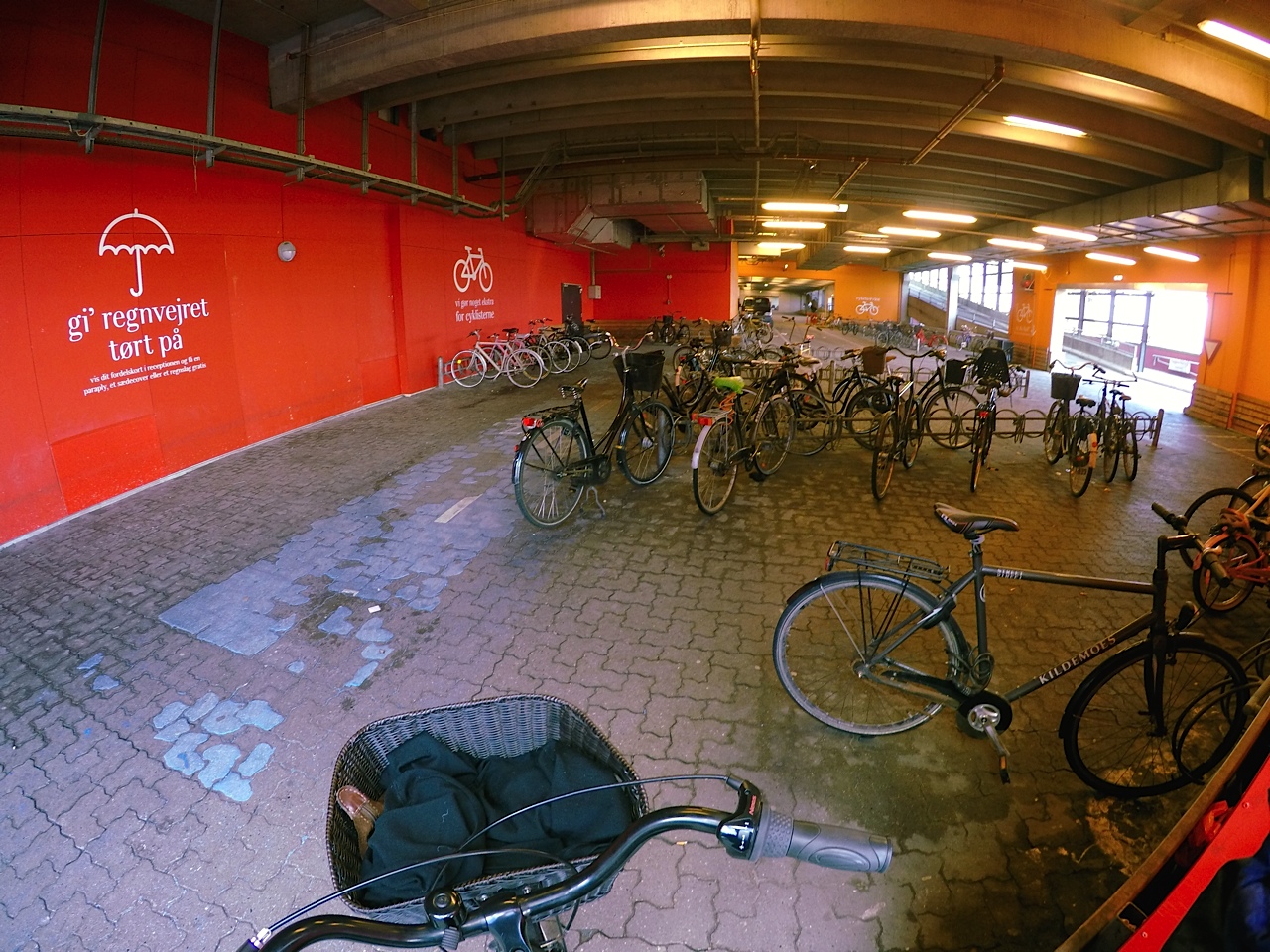
Undercover bicycle parking at Fisketorvet shopping mall.
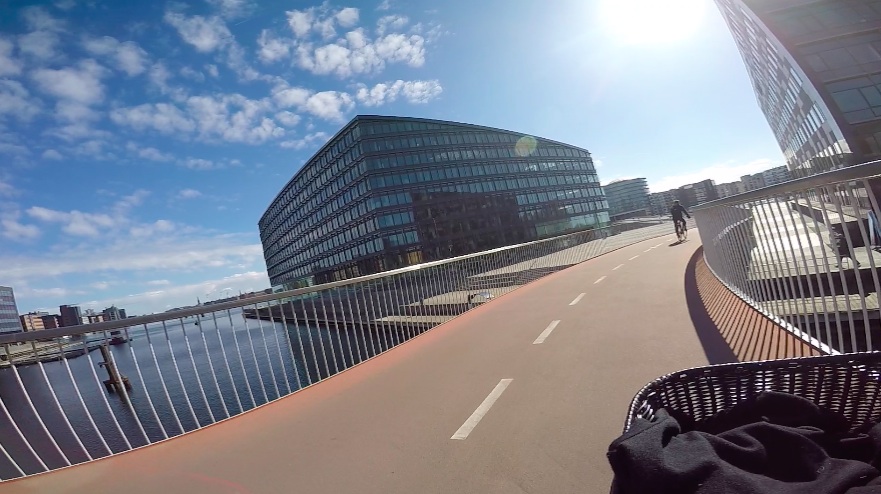
Freewheeling downhill along the winding Cykelslangen.
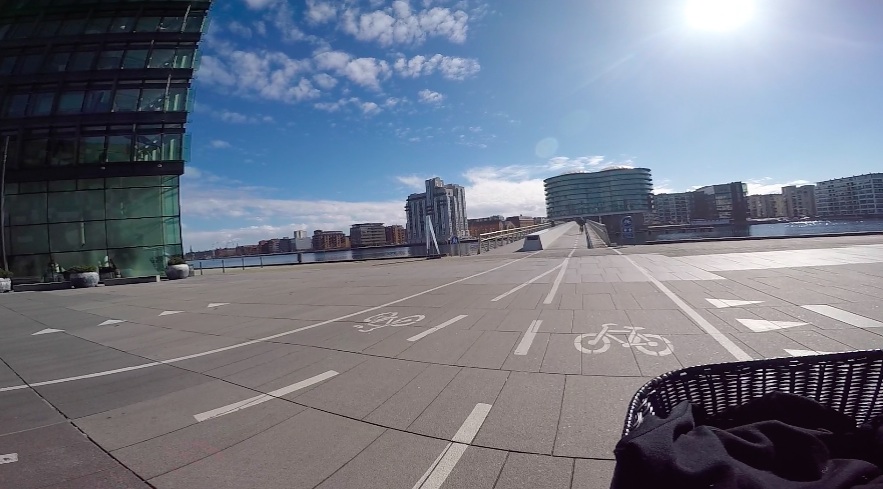
Approaching canal bridge at the end of the Cykelslangen. Two lanes for bicycles on the right and a pedestrian walkway on the left hand side of the canal bridge.
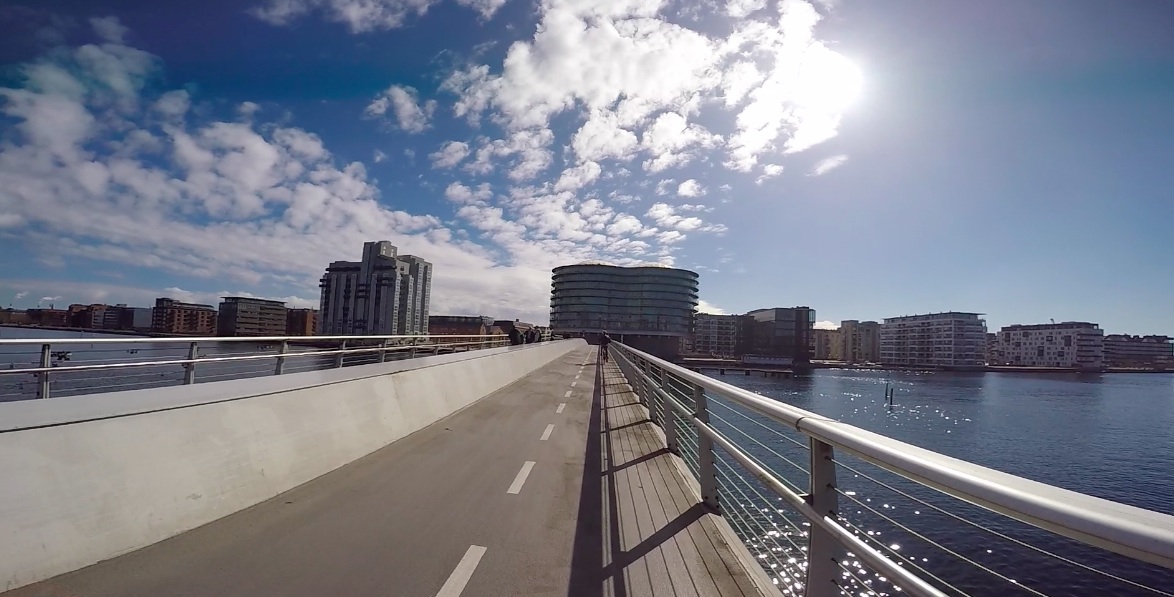
Over Bryggebro Bridge after the Cykelslangen.
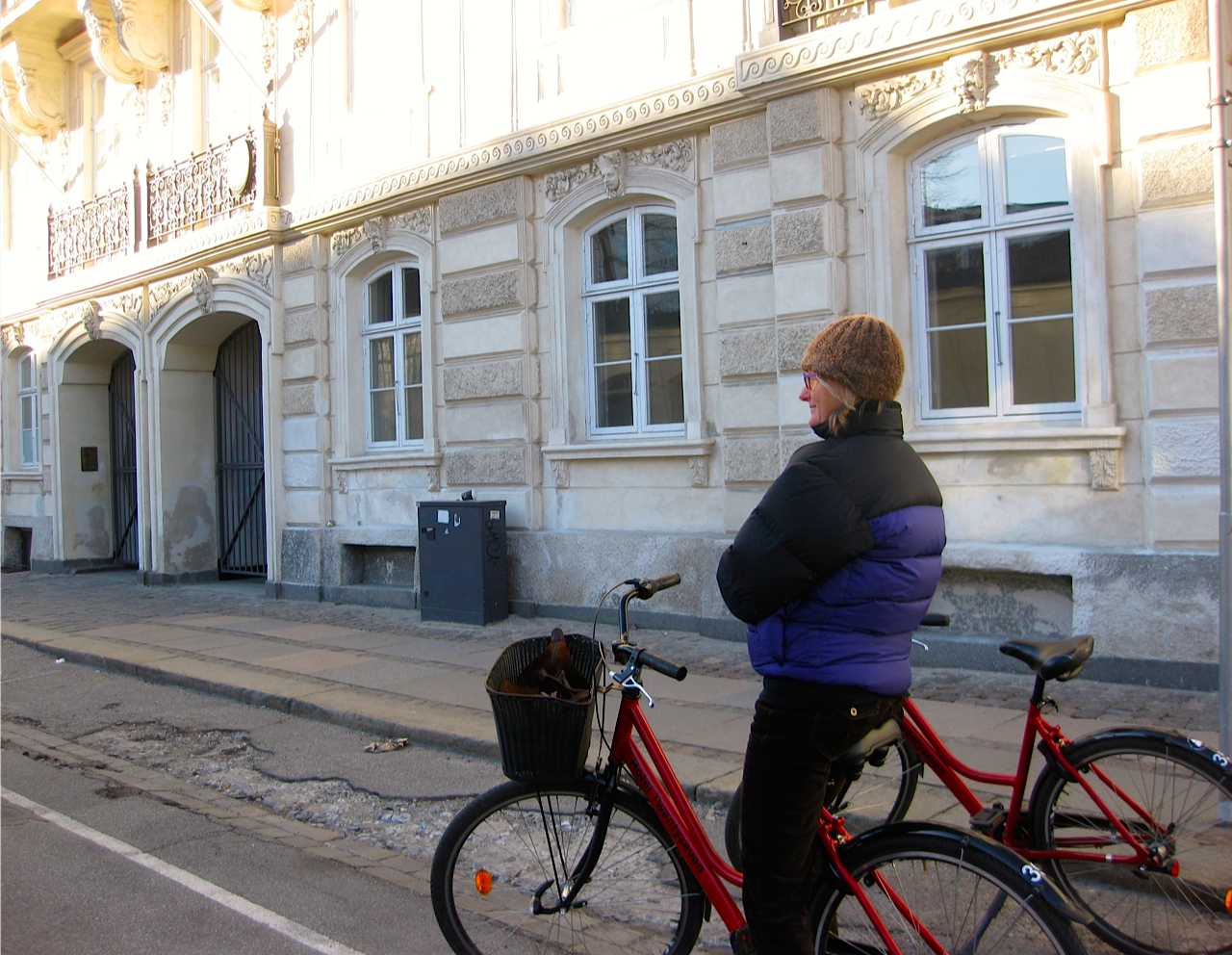
For April, I’m swapping seasons and travelling in Denmark and Norway. It’s early spring in the northern hemisphere and although the air is very cool when we arrive in Copenhagen, hiring bicycles and learning to ride the streets like the locals, makes me very happy.
Denmark’s Copenhagen and Amsterdam in The Netherlands are the world’s cycling capitals with brilliant infrastructure and high participation for everyday use. They provide models to which many world cities aspire where streets pulse with bicycles and make city living lively, making bodies healthier and air cleaner.
After adjusting to the time zone, I couldn’t wait to get on my bike!
Copenhagen has a bike hire system called City Bike. These distinctive white bikes have a front carrier, a tablet display with built-in GPS and can be collected or left at one of the many stations around the city. To use them, each rider has to sign up for an account, register a credit card and then bike hire is charged by the hours used.
However, it was easier for us to hire from our hotel and probably cheaper, with each bicycle costing 150DKK or about A$28 for the entire day. I hadn’t thought about it at the time but the distinctive white City Bikes signal tourist and I was glad that we chose to hire bikes from our hotel. Even with the hotel name printed on the bicycle, at a glance, they blended into the cycling streetscape.
Something we didn’t have to hire were bicycle helmets. Wearing a helmet is optional. While some cyclists do wear a helmet, many don’t. In this cool weather, it’s more practical to wear a warm woollen hat or beanie. I didn’t miss wearing a helmet at all and I’d like it to be optional in Australia as well. In 2013, a parliamentary review of cycling in Queensland (the State where I live) recommended a two year trial for removing the mandatory helmet rule for cyclists (16 years and over) in parks, on footpaths, bike paths and roads where the speed limit is no more than 60km/hour. However, the minister rejected the committee’s recommendation.
I love moving around by bicycle and in Copenhagen I notice how mobile it makes me. I can cover more distance than I would by walking. I can move more easily than by car. There’s no trouble with parking. I just park outside where I want to be. I feel energised by the exercise and the fresh air. I just have to remember to stay on the right hand side of the road. That takes some brain gym – “stick to the right and look left first”… and again “stick to the right and look left first”… and again.
Yet the infrastructure – the lanes, traffic lights and priority given to cyclists – makes it easier to adjust. To be continued...

Copenhagen City Bike hire station near Town Hall.
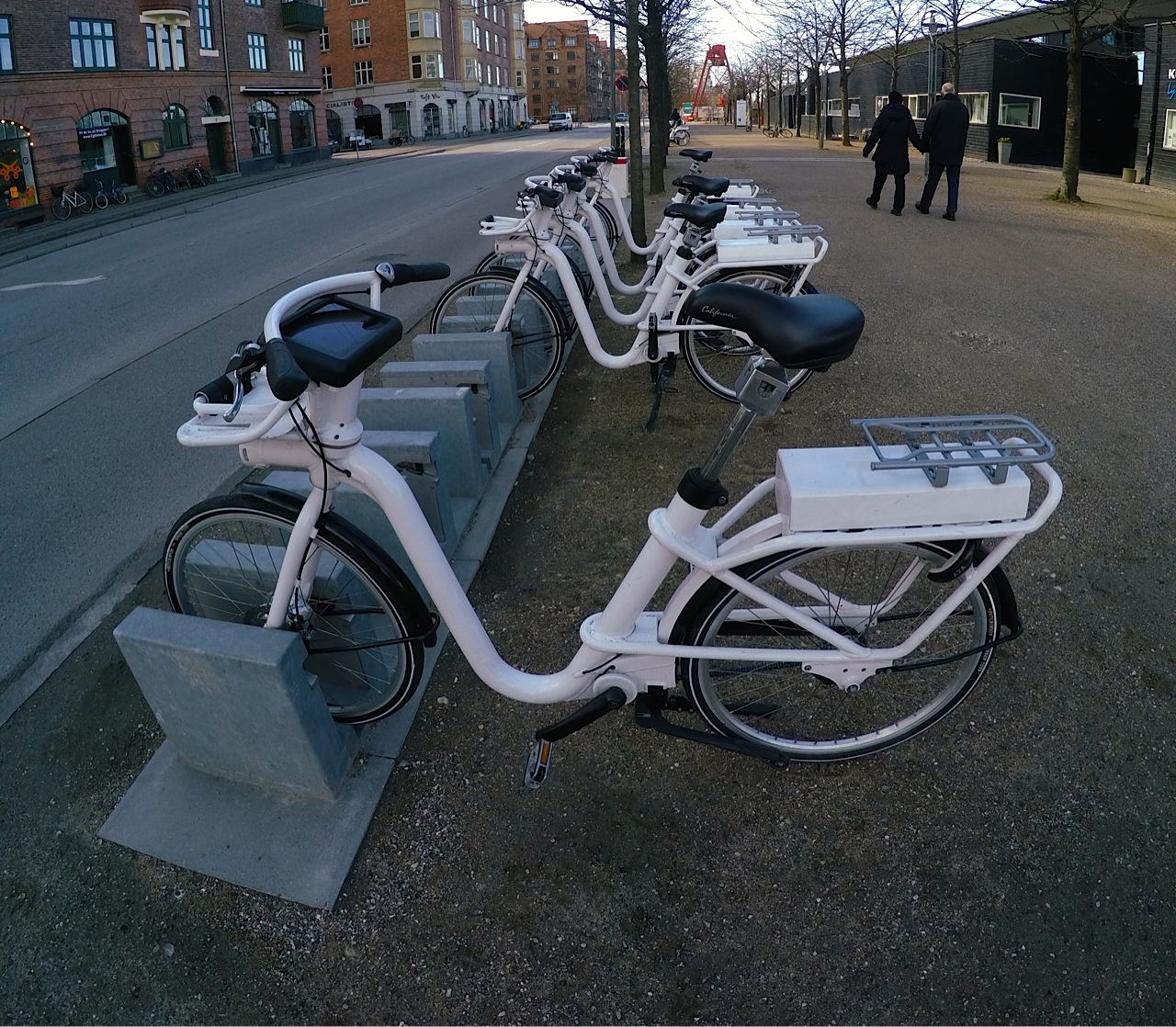
City Bike hire station on Islands Brygge,

Bicycle lane alongside the road… keep right!

Turning left at traffic lights… Stick to the right, stick to the right.

Bicycles by the dozens.

Visiting the palace…
 a bike for all seasons